Patrimonio Hoy — team workshop with post-it notes on the wall

A 3-day Design Sprint with 6 CEMEX decision-makers

Role Lead facilitator and prototype designer
Year 2020
Methodology Fast Solution Camp (CEMEX's Design Sprint adaptation)
← Back
CONTEXT

Patrimonio Hoy is a CEMEX program that has helped families in low-income communities self-build their homes for over two decades. It runs on weekly cash payments, technical advice, and a network of 200+ mostly-female field promoters who visit socios in their communities.

The team had been selected for CEMEX Mexico's internal innovation program. The Innovation team had already facilitated workshops with them to surface pain points: payment friction, delays in material ordering, low socio retention, and communication gaps with socios in low-connectivity areas. By the time I joined, 78 "How might we" questions were already on the board.

What Patrimonio Hoy asked me for was UX training, so they could design solutions themselves.

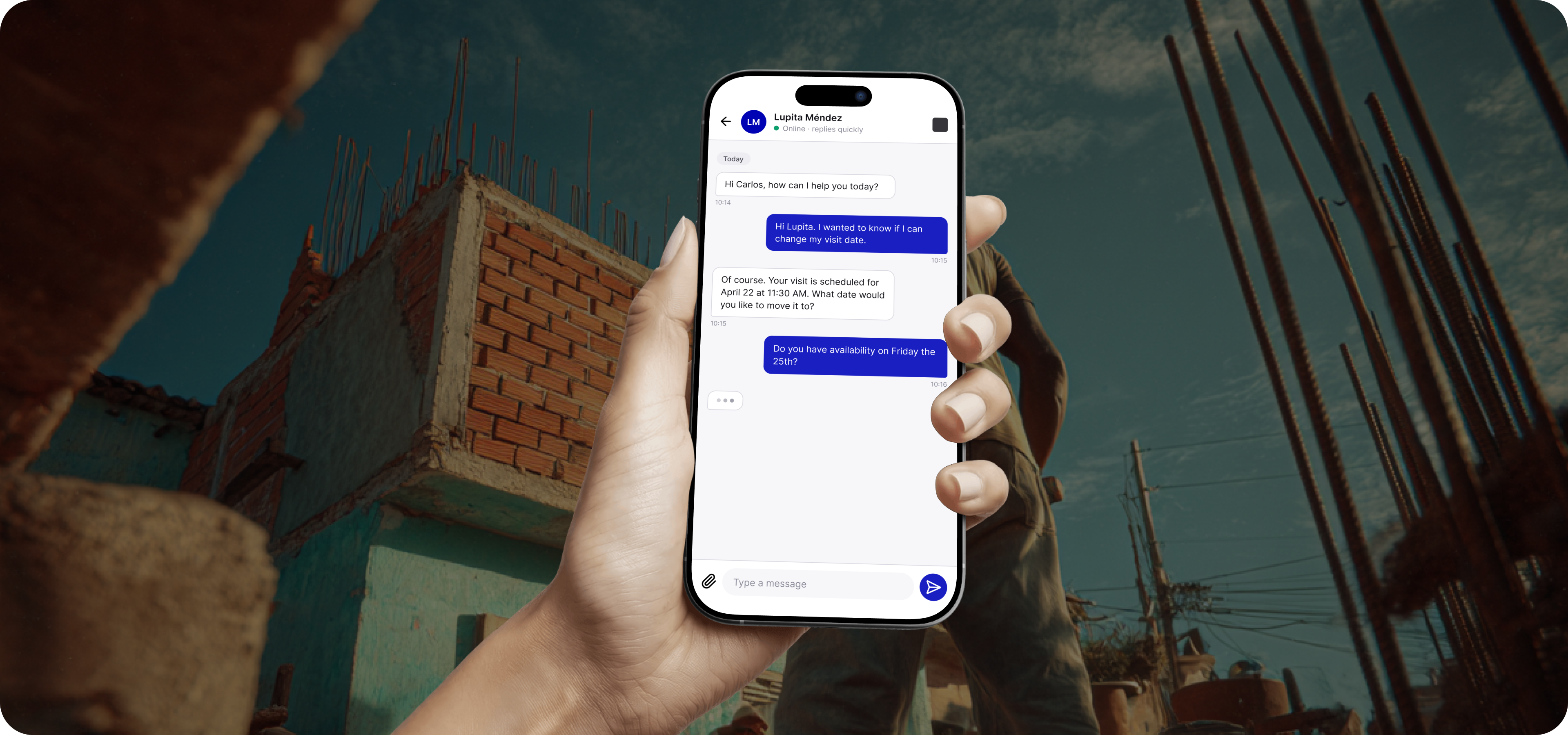
Patrimonio Hoy — hand holding phone showing chat interface with a socio scheduling a visit

1. Proposed co-design, not training.

I had just certified in Design Sprint. I read the situation as a time problem, not a capability problem.

Teaching UX from scratch would take weeks and leave the team with principles but no validated artifact. A Fast Solution Camp would take three days and leave them with a tested prototype they owned. I proposed the second path.

The tradeoff was mine. This was my first time leading a Fast Solution Camp, with the General Manager and five decision-makers in the room. I traded comfort for a better outcome for the client.

In three days, the team generated 13 sprint questions and prioritized 3. Proposed 7 long-term goals and committed to 1. Reviewed 10 Lightning Demos and built 6 independent user journeys that converged on a shared model of the product.
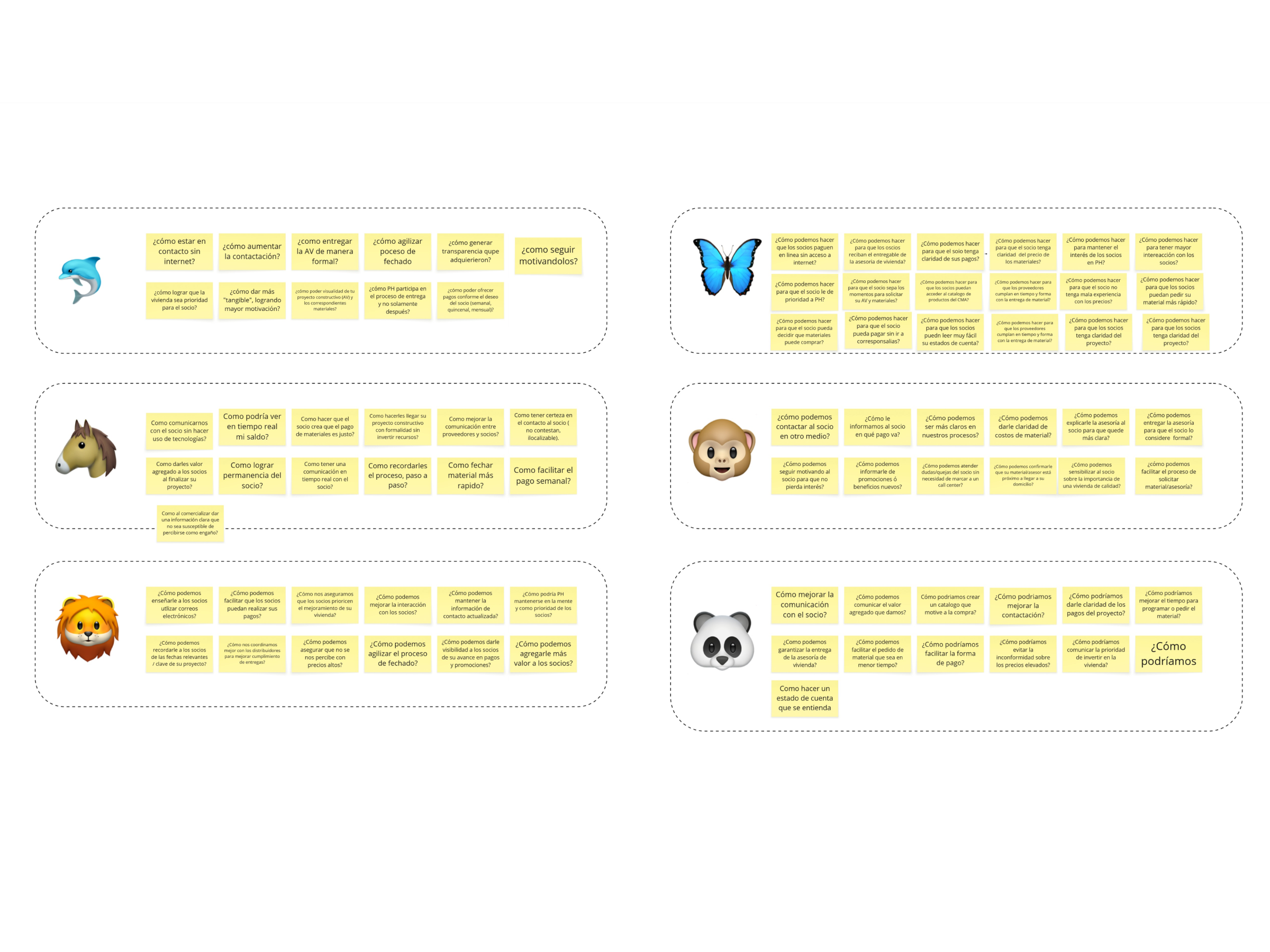
Patrimonio Hoy — Challenges wall with 50+ stickies from the team's ideation in Miro

2. Tested the prototype with 5 real socios before any development.

During the Solution Workshop, each team member sketched their own version of the end-to-end experience. Six independent proposals converged on a shared mental model: registration with socio number, visible project progress, payment scheduling, post-delivery follow-up, and quality evaluation.

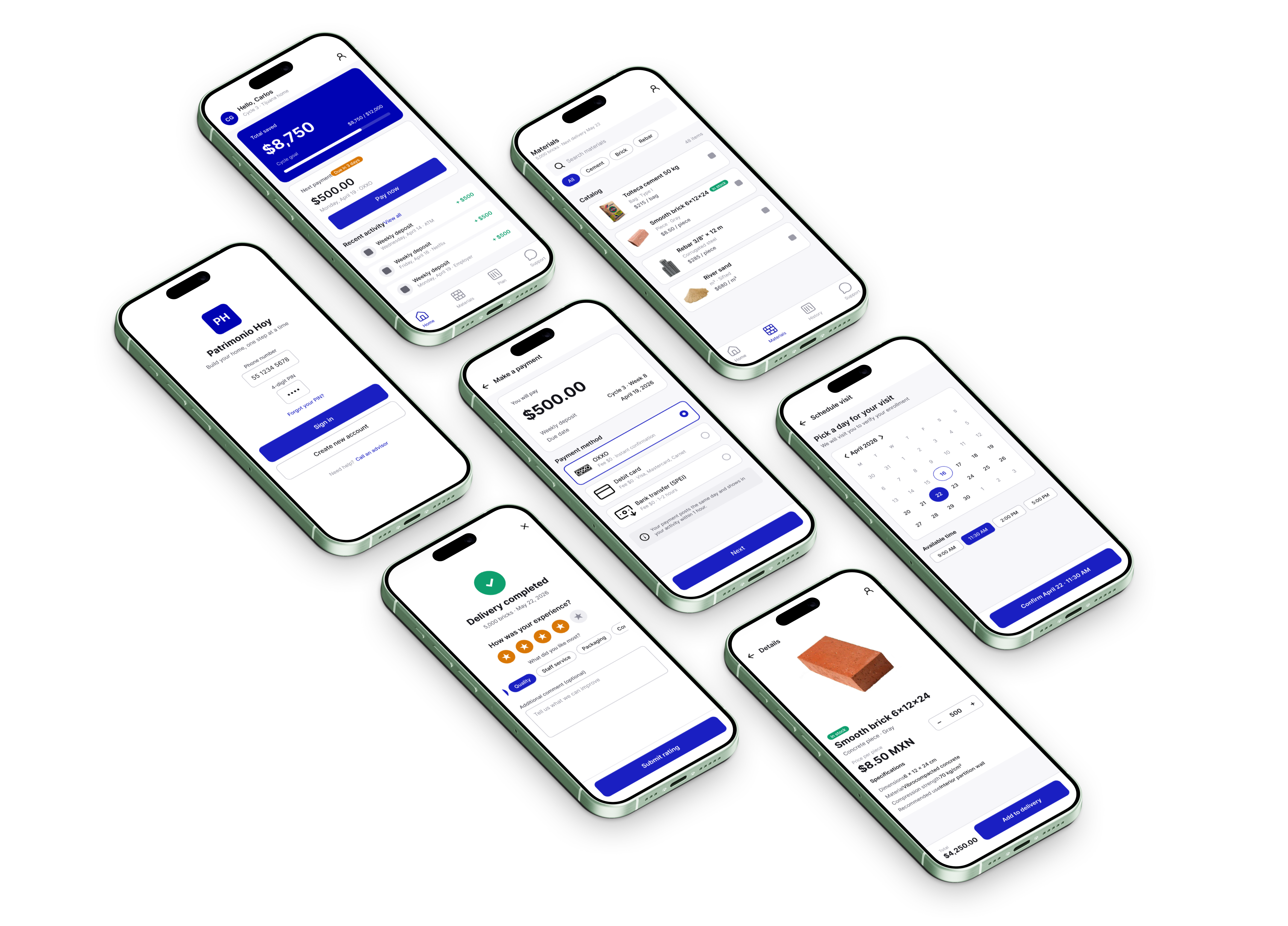
From those six sketches, the team built a single Storyboard. I translated the Storyboard into a navigable Figma prototype and tested it with 5 socios.

Design Sprint methodology recommends 5 users for usability signal. Enough to surface blocking assumptions, not enough to generalize behavior across a population. I was explicit with the team about that distinction.

All 5 socios completed the happy path unassisted. None abandoned.

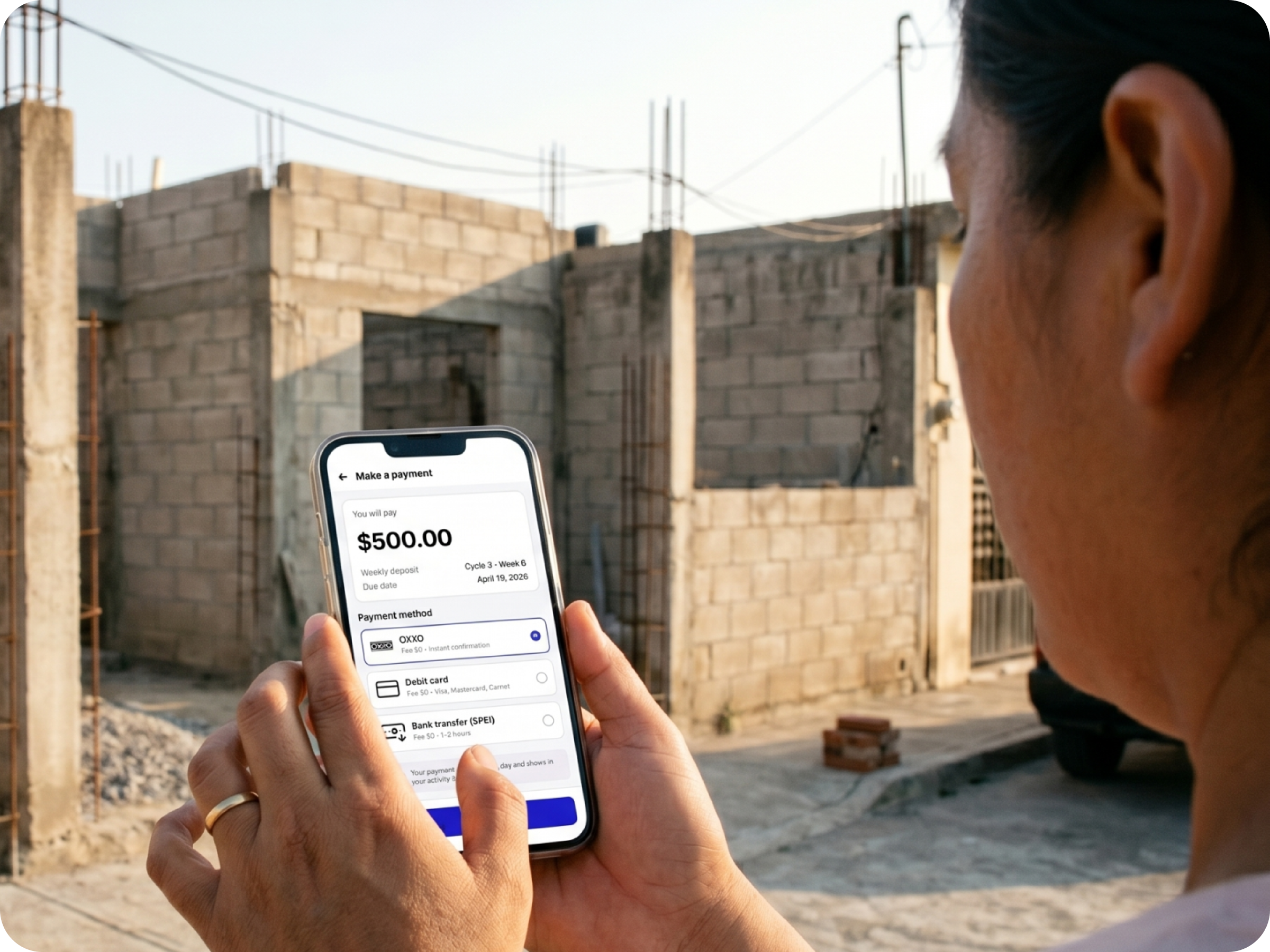
Patrimonio Hoy — prototype payment screen showing $500 weekly deposit with OXXO, debit card, and SPEI options
Patrimonio Hoy — 7 mid-fidelity prototype screens: login, dashboard, materials catalog, payment, scheduling, delivery review, and product details
WHAT TESTING CONFIRMED

3 of 5 socios mentioned not having a bank account.

This was not a discovery. During the Challenges phase, the team had already written on the wall: "How can socios pay online without internet access?" and "How can they pay without going to correspondents?" The hypothesis was there. What was missing was evidence.

Testing gave us the evidence. To strengthen it, I triangulated the qualitative signal with public data. Mexico's ENIF 2018 (INEGI/CNBV) reported that only 39% of adults in localities under 15,000 inhabitants had a bank account. The typical Patrimonio Hoy socio matches that profile: low-income, often a woman, often in a small community. Five users in testing were not an exotic finding. They were consistent with the reality of roughly half the country.

I documented this for the team as a recommendation: reconsider the digital payment feature, or focus the product on payment transparency (weekly progress visibility) rather than payment processing. What Patrimonio Hoy decided to build afterward was no longer in my scope.

OUTPUTS

Navigable Figma prototype (5 key screens).

Executive summary covering the 3-day process, findings, and recommendations.

Prioritized handoff to the Patrimonio Hoy team: 3 Sprint Questions, 1 Long-Term Goal, and the testing insights documented with public-data context.

WHAT THIS PROJECT SHOWS

Reading the real constraint. The client asked for training. The constraint was time, not knowledge. Proposing co-design shortened the path from pain points to a tested prototype.

Stretch assignment executed. First Fast Solution Camp as lead facilitator, with the General Manager in the room and five other decision-makers.

Evidence over hypotheses. The team had hypothesized connectivity and bancarization barriers. Testing with 5 users plus public data turned those hypotheses into a defensible recommendation they could act on.